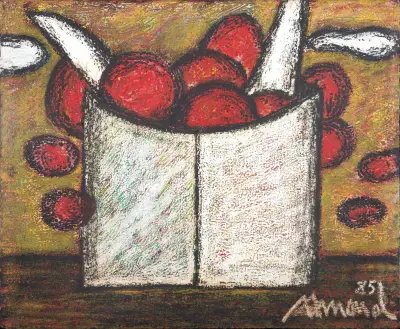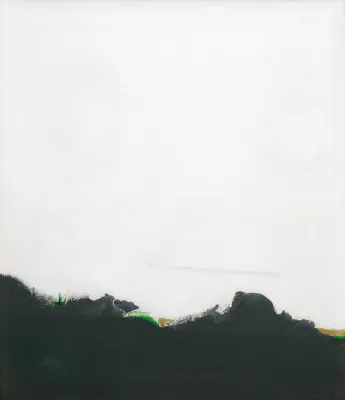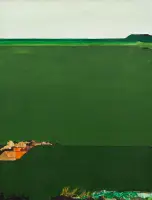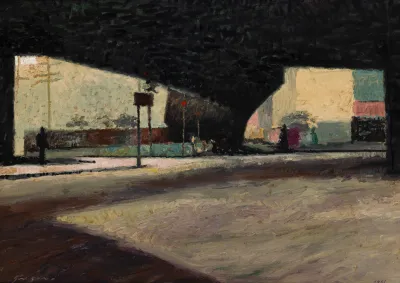

Francisco Rebolo (São Paulo SP 1902 - idem 1980)
Francisco Rebolo was a painter and printmaker. He began his art studies at the Escola Profissional Masculina do Brás, where he took drawing lessons with the teacher Barquita between 1915 and 1917. At 14, he began working as an apprentice wall decorator. Alongside his work as a decorator, he played football, for the Associação Atlética São Bento from 1917 to 1922, the Sport Club Corinthians Paulista from 1922 to 1927 and the Clube Atlético Ypiranga from 1927 to 1934. In 1926, he set up a decoration studio on Rua São Bento. In 1933, he moved his studio to a room in the Palacete Santa Helena and took up painting. In 1935, he began sharing his studio with Mario Zanini. Later, other rooms in the Palacete were turned into studios and occupied by several painters, among them Fulvio Pennacchi, Bonadei, Humberto Rosa, Clóvis Graciano, Alfredo Volpi, Rizzotti and Manoel Martins. This group of artists became known as the Grupo Santa Helena. Rebolo developed a body of work grounded in figuration, but from the 1950s on he ventured into abstraction and later into constructivism. In 1937, he took part in founding the Sindicato dos Artistas Plásticos de São Paulo and joined the Família Artística Paulista (FAP). In 1945, he helped create the Clube dos Artistas e Amigos da Arte (Clubinho), which he directed on several occasions. With the foreign travel award won at the 3rd Salão Nacional de Arte Moderna, he left for Europe in 1955. In 1956, he took a restoration course at the Vatican, taking part in the restoration of a work by Raphael. From 1959, encouraged by Marcelo Grassmann, he began a series of experiments as a printmaker.
The boy and the cart
The boy walked along the potholed streets of the old Morumbi neighborhood, where he lived on a small farm with his parents, Spanish immigrants who had come to Brazil in search of a better future but lived here in the same poverty they had left on the other side of the Atlantic.
Worry had taken hold of his mind, but not to the point of disorienting him. The night before, he had overheard his parents in a gloomy conversation in which they were trying to find a way out of the financial crisis, which by then had reached the point where there was not even money for the family's basic needs.
Feeling already an adult at the lofty age of twelve, the boy left home without telling his parents and went looking for work, anything that would help them out of that distressing situation.
Just then a cart passed by him, carrying a load of bricks, and his eyes lit up:
"I'll follow this cart. Wherever it stops, there's sure to be work."
Indeed, a little further on, the cart stopped in front of a building that was almost finished, already in the finishing stage.
"What can you do?" the contractor asked him.
"Everything!" he answered resolutely.
It was obvious at first sight that, apart from his goodwill, the answer was a boundless exaggeration, but the man noticed in him a willingness that impressed him. He gave him a can of paint and a brush, testing his skill at painting doors and shutters.
It was the first work of Francisco Rebolo Gonzales, who would later become an important reference in Brazilian painting, one of the founders of the Grupo Santa Helena and a supporter of several other names, such as Alfredo Volpi and Mário Zanini.
The talent of the "little guy"
Francisco Rebolo Gonzales was born in São Paulo in 1902 and died in the same city in 1980. As a child, while in primary school, he went looking for odd jobs, earning small change, enough to help pay for his studies.
He was 15 when, after his first experiences painting walls, he got a steady job as an apprentice in a decoration workshop, developing his talent decorating churches and also houses, where rococo painting, full of flourishes and excesses, was common.
He did not believe, however, that this was his art, and at the first opportunity he took up a career as a football player, joining the Corinthians team, with which he won the Championship of the Centenary of Brazil's Independence in 1922.
At 1.62 m tall, Rebolo was one of those "little guys" who have caused or still cause a sensation in football, always appearing by surprise and confounding opponents with the speed of his moves and the ease with which he shook off his markers.
Since the football of old, played with heart and grit, did not pay the bills, he used his free time to continue the decoration work, which he never abandoned and which supported him when, in 1934, he left the sport to devote himself to painting, setting up an office on Rua de São Bento.
The Santa Helena Group
Much later, Rebolo teamed up with Alfredo Volpi, a wall painter like himself, and rented a room in the Palacete Santa Helena, next to the São Paulo Cathedral, then still under construction, on Praça da Sé.
To call it a palacete (small palace) was an exaggeration. The building, of only a few floors, built before reinforced concrete had reached Brazil, housed a luxurious cinema-theater, with a stage, boxes, balconies and fine decoration that included sculptures and even a fresco painted on the central dome.
But that part of the city had long since deteriorated. São Paulo's art scene had moved to the Cinelândia, at the corner of Avenida Ipiranga and Avenida São João, also taking the smartest offices and shops to the other side of the Anhangabaú Valley. The Cine Santa Helena began showing second-rate films, and the building's rooms, with no takers, were rented out for a few pennies.
For the fledgling visual artists, it was a perfect match. The rooms were spacious, in a quiet place, and only a block from the Escola Paulista de Belas Artes, allowing contact with more advanced students and even with teachers.
Among the masters was Paulo Rossi Osir, with an entirely European training, who not only helped develop the Grupo Santa Helena but also set up a decoration workshop, Osirarte, where he gave work to the artists of that circle.
The Grupo Santa Helena, of which Rebolo was the central figure, was of great importance in the development of the arts, including through the organization of the Família Artística Paulista, which held a series of group exhibitions in open opposition to the Salões de Maio, organized by artists who were better off in life and refused to make room for the "worker" artists.
A recognition that was slow to come
In 1944, Rebolo ventured his first solo exhibition at the Livraria Brasiliense, but, despite the success of this and other exhibitions, it was only ten years later, in 1954, that he truly gained notice, when he won a travel award to Europe at the 3rd Salão Nacional de Arte Moderna.
It was the great opportunity, put to good use, to perfect his art, on a tour with his family through Italy, Spain, Germany, France, Austria and the Netherlands, besides taking a restoration course at the Vatican Museum.
Without losing his simplicity, the Rebolo who returned to Brazil was another man, much more mature. His painting kept its flat lines and forms reduced to the minimum required in figurative art, but one notices a much more developed and less naive technique.
From then on came a succession of exhibitions, interviews and commissions. It was the consecration he had never dreamed of, which, though late, came into his life.
Morumbi, his own piece of land
Having gained not only status but also a more solid financial situation, Rebolo was able to fulfill one of his life's dreams. He built a comfortable house in the Morumbi neighborhood, fifty meters from the old farm where he had spent his childhood of hardship.
It was there that he died, at the age of 79, on July 10, 1980. The old village of smallholders had by then become one of the richest and most populous neighborhoods of São Paulo, which did not change the habits of the poor boy who had been born and spent his childhood there.
His daughter, Lisbete Rute Rebolo Gonçalves, who holds a doctorate in Museology from the Universidade de São Paulo, has taken on the task of preserving his memory. She was director of the Museu de Arte Contemporânea and President of ABCA (Associação Brasileira de Críticos de Arte). She is currently in charge of preparing the celebrations of Rebolo's centenary, to be held in 2002.
Riding pillion on Galateia
Francisco Rebolo Gonzales, former Corinthians player, half Spanish, half caboclo, is in many ways reminiscent of another Spaniard and Corinthians man, the club's colorful former president, Vicente Mateus. Like him, he spent his life creating stories about himself, some true, allowing for exaggeration, others invented by himself, casting a folkloric haze over his biography.
Once (he swore it was true), Rebolo went on his motorcycle, Galateia, to pick up the painter Djanira, who was somewhere in São Paulo, to take her riding pillion to the house in Morumbi.
When they were already near the house, a huge storm broke, and the dirt streets became almost impassable. At one point, Rebolo asked Djanira to get off for a few moments and, stuck in the mud himself, pushed the motorcycle through a swamp.
Having overcome the obstacle, he got back on the motorcycle and rode on to his house, where his wife greeted him with the greatest astonishment: "But where's Djanira?"
Djanira had been left behind in the swamp and had to finish the journey on foot, in the middle of the mud.
Critical Commentary
The son of Spanish immigrants of humble origin, Francisco Rebolo comes into contact with painting through the trade of painter-decorator. Growing up in the Mooca neighborhood, in the east of São Paulo (SP), he has to work from an early age. In 1915, he takes a job as an apprentice wall decorator. Between 1915 and 1917, he attends the introductory drawing course at the Escola Profissional Masculina do Brás. He helps decorate the churches of Santa Cecília and Santa Efigênia, where he paints murals imitating leather and marble. From 1917, he begins working independently as a house painter, making decorative friezes in various styles. In 1926, he sets up an office on Rua São Bento. Between 1917 and 1934, Rebolo has a relatively successful career in São Paulo football, playing for Sport Club Corinthians (he is responsible for the definitive design of the club's emblem in the 1930s).
From the 1930s on, easel painting begins to take on growing importance in Rebolo's life. In 1935, he invites the painter Mario Zanini (1907 - 1971), with whom he has been taking informal drawing lessons since 1933, to share a studio room in the Edifício Santa Helena, in the Sé district, where he had moved in 1933. Other artists such as Fulvio Pennacchi (1905 - 1992), Bonadei (1906 - 1974), Humberto Rosa (1908 - 1948), Clóvis Graciano (1907 - 1988), Alfredo Volpi (1896 - 1988) and Manoel Martins (1911 - 1979) join them to share the rent of the rooms and the life-model sessions (in the studio and at the Escola de Belas Artes), exchange technical and historical knowledge about painting and organize weekend outings to the outskirts of the city to practice open-air landscape painting. Thus arose what came to be known as the Grupo Santa Helena, of which Rebolo becomes one of the leading figures.
Despite their personal differences, they were united by an emphasis on mastery of painting technique and an aesthetic position halfway between academicism and the early modernism of the 1920s. In this sense, the Grupo Santa Helena is associated with certain Italian currents such as the Novecento and the Valori Plastici group, which advocated the integration of impressionist and post-impressionist achievements - above all Paul Cézanne (1839 - 1906) - with the tradition of Italian painting.1 These ideas were spread in Brazil by Italian or Italian-trained artists such as Rossi Osir (1890 - 1959), Vittorio Gobbis (1894 - 1968) and Hugo Adami (1899 - 1999), but also by magazines, books and important exhibitions of foreign art held in the period. In Rebolo's case, this leap toward a more conscious knowledge of art history owes much to his contact with the critic and intellectual Sérgio Milliet (1898 - 1966), with whom he exchanges paintings for books and of whom he becomes a close friend.
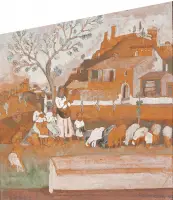
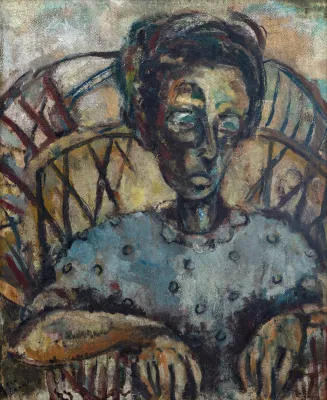
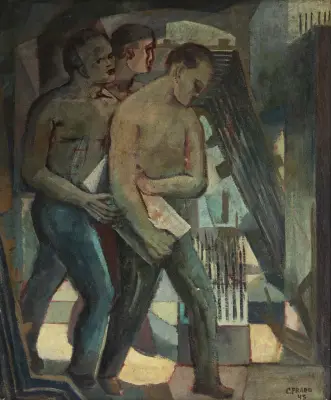
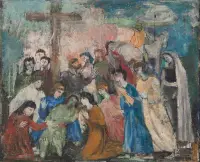
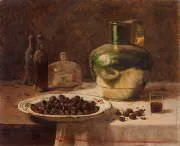
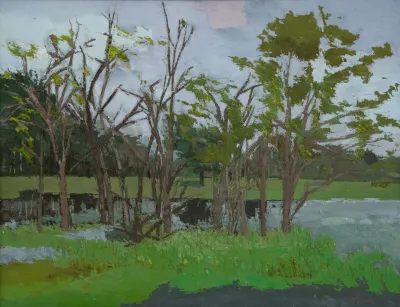
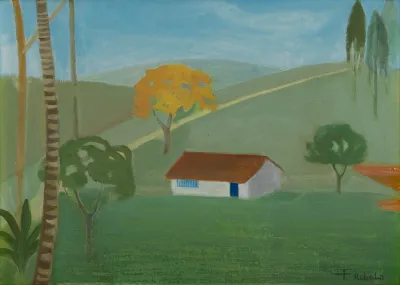
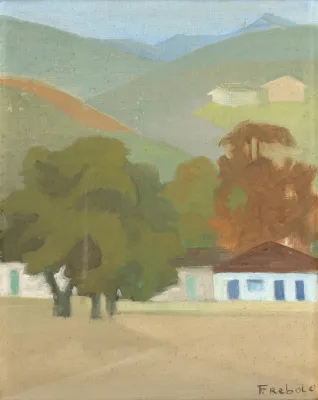
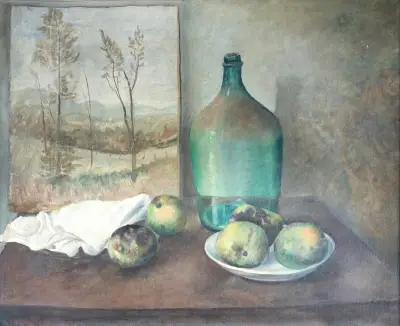
Best known as a landscape painter, Rebolo also devotes himself to still lifes, portraits and self-portraits, and urban and suburban scenes. His pictorial production develops without leaps and remains unified in several respects, for example in the use of a subdued palette rich in nuances. Accordingly, Milliet defines him in 1941 as a "master of the half-tone". In the course of the 1940s, the more or less diffuse patches of color that serve to represent his subjects at the beginning of his career give way to well-defined colored masses, and the paintings come to be structured more strongly as distinct fields of color. From the outset, Rebolo's empathy and lyrical, undramatic gaze in focusing on the landscapes of the outskirts and on urban scenes are striking.
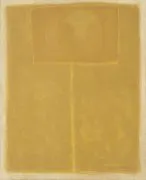
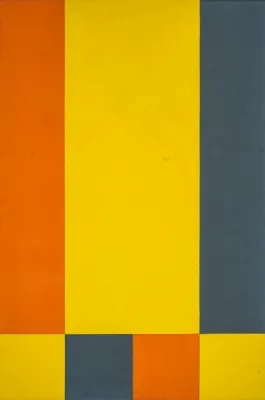
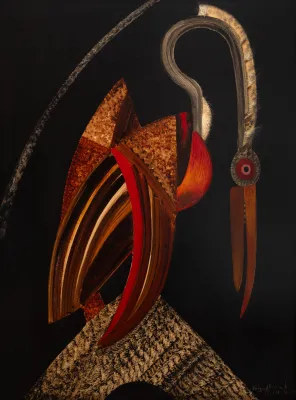
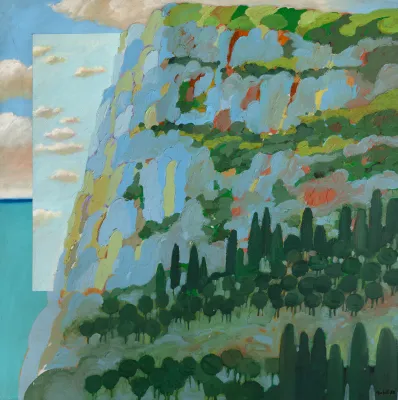
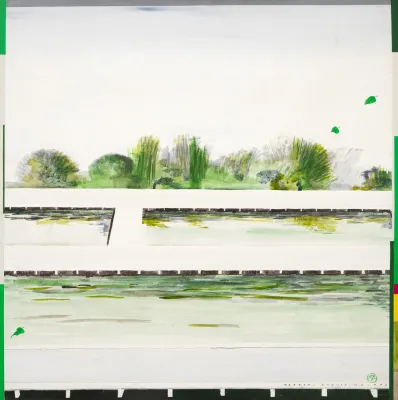
It is with a painting of constructive influence, structured in geometric planes and painted in black and white, Casas da Praia Grande or Casario (1954), that Rebolo, curiously, wins the foreign travel award at the 3rd Salão de Arte Moderna in Rio de Janeiro, in 1954. He spends two years in Europe with his family, traveling through countries such as Spain, Germany, France, Belgium, the Netherlands and Italy, where he settles. His European phase produces works of great geometric rigor in their formal structure, influenced by colors typical of Italian architecture such as ochres and earth tones and the Pompeian red of works like Ravena (1956), Roma (1956), Veneza (1958) and Suzy (1959), painted in Brazil. After a momentary crisis, Rebolo begins to devote himself to printmaking in the 1960s, under the guidance of his friend Marcelo Grassmann (1925 - 2013). He seeks to experiment with new materials and in the 1970s uses acrylic paint, making his paintings more stylized and flat. To the end of his life he never abandons figuration and, above all, landscape painting.
Notes
1 ARGAN, Giulio Carlo. Arte moderna: do iluminismo aos movimentos contemporâneos. São Paulo: Companhia das Letras, 1992. p. 372.
Critiques
"Rebolo (...) is one of the most talented painters of the Grupo Santa Helena. A landscape painter above all, his art is characterized by the nuancing of color. Rebolo is a master of the half-tone. For that very reason he is a painter of humble corners, with a marked preference for the suburban atmosphere. Misty skies, simple houses, neatly combed hills, rustic vegetable gardens and yards: such is the setting of his canvases, which excel in sensitivity. Rebolo is not an intellectual; he disdains complicated theories and believes only in the human experience of the painter. (...) He was also drawn to still lifes and above all to flowers, which he always interprets with great finesse. But besides being an artist, Rebolo is a much-loved companion of the whole modernist group of São Paulo. Through his simplicity and his integrity, he has won and keeps everyone's affection. Self-taught, his uninterrupted progress shows how much serious effort in the service of natural talent is worth. (...) Awarded prizes at the official salons, his art proves accessible to the general public; welcomed at the more advanced salons, it also proves capable of convincing through its originality and freedom of execution".
Sérgio Milliet
MILLIET, Sérgio. Pintor dos Recantos Humildes. In: ARAÚJO, Emanoel. Rebolo. São Paulo: MWM, 1986. (Coleção MWM-IFK), p. 105. [Text originally published in the Suplemento of O Estado de São Paulo, São Paulo, 1941].
"For Rebolo, landscape has always been the faithful inspiration of his art. Planting his easel in the open country (...) he sought in wild nature what his delicate artistic inspiration did not find in the artificial world of the city. Urban life he always saw through its working-class outskirts... Without knowing it, he did the same as the impressionists many years before: he fled the cosmopolitan environment to seek in the countryside the vibrant atmosphere of the open air. While the academics stayed in their studios perfecting the copper color of their kitchen pots, Rebolo rushed to meet living matter and 'enter into the reality of life', as he himself says. But the naive landscape painter Rebolo gradually gave way to a painter who gained intellectual depth day by day. At a certain point, he turns to the figure. Then to still life. Soon to more considered drawings. He began to feel the need for compositional discipline. Only then does this country-bred self-taught artist come to understand what a Cézanne represents. But he considers himself lucky to have been a 'savage'. He claims, with some reason, that this is why he was never contaminated by the vices that lead so many people astray".
Walter Zanini
ZANINI, Walter. Na Realidade da Vida. In: ARAÚJO, Emanoel. Rebolo. São Paulo: MWM, 1986. (Coleção MWM-IFK), p. 116. [Text originally published in O Tempo, 14/09/1952].
"Rebolo Gonsales, as an artist of our post-impressionism, is the prototype of the craftsman specimen we might call the 'paulistano' painter (of the city of São Paulo), parallel to the aesthetic specimen of the 'paulista' painter (of the state of São Paulo). As a craftsman, moreover, he shows a rare integrity, both retrospective and prospective. He prepares the supports, keeps and selects the canvases, sensitizes them through the action of time and of the ground, and then plans the subjects and adjusts the pigments to them. (...) His pigments are personal, in the sense that they result from choices, preferences, syntheses, brushes, palette knives, glazes, ranges and shades. In this respect, his palette is rich and always serves sensory, almost tactile materials. It would be neither a figure of speech nor an analogical habit to place him among our first 'fauves', for the vibration of his atmospheres. His work, alongside that of Volpi, Gomide, Zanini and De Fiori, constitutes a pleasant, local, almost neighborhood cosmogony, though of wide use, from the depiction of the São Vicente coast to the bends of the Tietê. A painter of São Paulo, city and state, of such stature that he is ipso facto a national painter. One of those who best know the métier and make it sensitive in their own specific way".
José Geraldo Vieira
VIEIRA, José Geraldo. In: ARAÚJO, Emanoel. Rebolo. São Paulo: MWM, 1986. (Coleção MWM-IFK), p. 118 [Text originally published in Folha Ilustrada, São Paulo, 10/09/1965.]
"Rebolo's record of everyday life has the character of an intimate diary that opens itself to the reader to be completed and to keep up the dialogue: 'man and the world around him' or 'man-nature'. The records sought are the simplest and most prosaic. He seeks to document his own experience in a personal way. This is how, from the window of his studio in the Santa Helena, he records São Paulo as it begins to grow, producing precious documents of a period of transition in the urban landscape, as in the works Rua do Carmo, of 1936, and Praça Clóvis, of 1944 - direct and simple observation of peaceful people and of a city in transformation.
From the mid-1930s to the end of the 1940s, he prefers to paint landscapes in the open air. His choice is to paint towns in the interior of the state or on the coast and, preferably, the suburban region of São Paulo (...).
(...)
From the end of the 1940s into the 1950s, he gradually moves to working in the studio. He prefers a visual scheme that is free and intuitive rather than mathematical. Even so, his compositions show structural assurance and a tendency to return to similar solutions. From his first works to his last phase, Rebolo shows keen sensitivity in the composition of his works, balanced as if following a secret, preconceived scheme. From the beginning of his career, the triangular scheme and the presence of three prominent elements are common, such as a group of trees, a road, a hill, or trees, people or animals. In the work Bois e Coqueiros, from a later phase, of 1967, the presence of the group of three elements - houses, oxen and coconut palms - is so emphatic that it competes with the other elements of the composition.
(...)
After a big farewell at the 'Clubinho', he leaves for Europe with his family for two years. The trip brings visits to museums and studios and the execution of new works. Italian architecture motivates him to make works of greater rigor. The very strength of Renaissance architecture guides the construction of well-structured facades that follow the typical tones of Roman architecture: ochres, earth tones. The work Roma, of 1956, ensures the discipline of the gaze and the lyricism of the 'eternal city'. From the visit to Pompeii comes the mark of the famous Pompeian red, which appears in several European landscapes such as Ravena, of 1956, which moves away from a rigid construction and approaches a 'fauve' composition. On his return, in August 1957, he exhibits the canvases painted in Europe at the Museu de Arte Moderna. He remarks that he felt renewed, as if he had taken a bath of youth. In the work Suzy, of 1959, he shows that he retains memories of the European period, combining formal rigor with variants of Pompeian red in the poetic vision of his daughter playing a little flute.
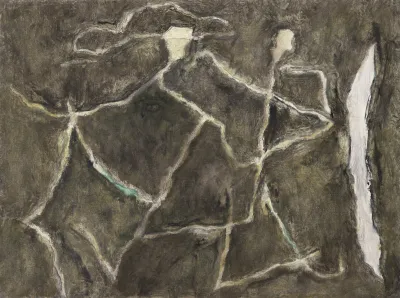
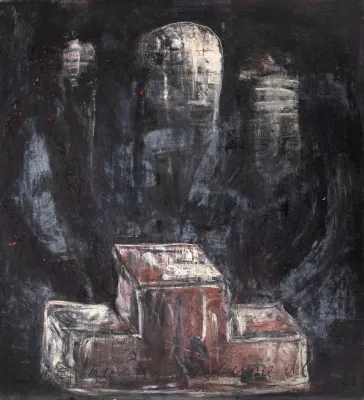
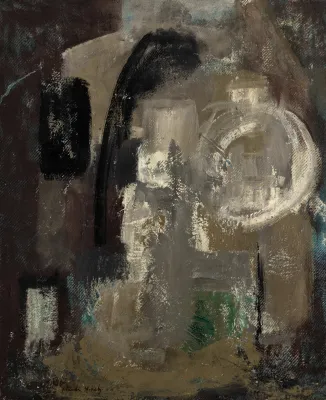
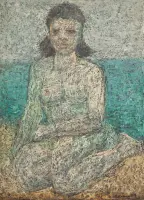
At the age of 60, he is temporarily forced to give up painting after suffering a heart attack. He sets the paints aside and turns to drawing. Once recovered, in the 1960s the investigation of matter becomes his fundamental hallmark. At Marcelo Grassmann's insistence, he produces a series of prints, in search of new developments. From 1960 to 1965, the influence of printmaking translates into a light 'rustling' of the colors. But the inspiration for this kind of painting, Rebolo notes, comes from contemplating Etruscan paintings marked by history: with intact parts beside forms eroded by time. For the painter, the peeling parts of these paintings suggest new forms and are a source of new conceptions.
(...)
At the end of the 1960s he eliminates black, allowing light colors to reappear. In the 1970s he returns to structural lines and reduces texture, reaching flat colors. He brings about a return to the magical touch of his early days - a lyrical ring, marked by purpose and restlessness, in which points of arrival come close to the point of departure. In his last years he travels through several Brazilian states, recording typical places and the light that distinguishes them".
Elza Maria Ajzenberg
AJZENBERG, Elza Maria. O artesão da cor. In: ARAÚJO, Emanoel. Rebolo. São Paulo: MWM, 1986. (Coleção MWM-IFK), p. 41-43 e 46-48.
"Rebolo devoted himself to printmaking in two periods of his artistic life: from 1959 to 1962 he worked on more than twenty woodcut matrices and, in his last years, he presented us with as many etchings.
The use of woodcut does not exactly constitute a novelty in his work, since it represents a continuation, with new resources, of the monotypes, a process considered by many to be related to printmaking, which Rebolo had long practiced.
In fact, woodcut became a more extensive and durable process for continuing the work already begun with the monotypes. Returning to printmaking from 1970 on, Rebolo moved to metal and achieved, on copper, a new symbiosis by adding watercolor to his etchings.
(...)
Nevertheless, perhaps the most important thing to stress regarding Rebolo's prints is that they can be and are appreciated as prints, regardless of the artist's original intention, which was to use them as a traditional instrument for the development of his painting. When the plates are subjected to traditional printing processes and the editions are kept free of the additions the artist made to the first proofs, one finds a highly defined quality, as and insofar as they are prints. And this appreciation reveals Rebolo the printmaker, with very personal resources and free of the mannered distortions of professional printmakers".
Marcelo Grassmann
GRASSMANN, Marcelo. A presença da gravura. In: ARAÚJO, Emanoel. Rebolo. São Paulo: MWM, 1986. (Coleção MWM-IFK), p. 150.
"This stay abroad gives the artist new experiences: 'it was really one of the important things in my life, as I stayed in Europe for two years, taking courses, in contact with museums and frequenting artistic circles. I confess that the grandeur of the works I had the opportunity to see came to intimidate me as soon as I returned, but I ended up absorbing new elements for my painting; because of the impact I had, I entered a phase of research and experiments, around 1960, which led to my current work'".
Celia Lucia Rodrigues Torres Parahyba Campos
CAMPOS, Celia Lucia Rodrigues Torres Parahyba. Rebolo: uma poética da paisagem. 1990. 159 f. Tese (Mestrado em Artes) - Escola de Comunicação em Artes, Universidade de São Paulo. São Paulo. p. 21.
Testimonials
"Before painting, football had already marked my life. As in football, I think that in art one must do spontaneous things, marked by love and enthusiasm, in order to be moved and to move other people.
While still a football player, I preferred the circles of artists at the Café Paulista on Praça Antonio Prado or the Café Guarani on Rua XV de Novembro. After renting a room in the 'Santa Helena', I began to have more contact with artists, some already established, others beginners, and that was beneficial to my development as a painter. We all painted with new ideas in our heads, wanting to escape the bad taste and distortions prevailing in art, and we had one very clear thing in common: the will to study and learn to paint.
It was right there in the 'Santa Helena' that the intellectuals and critics came to discover us. Sérgio Milliet, one of my closest friends, was among the first, together with Mário de Andrade, Paulo Magalhães, Oswald de Andrade, Paulo Mendes de Almeida, Alfredo Mesquita, Quirino da Silva and many others. They were all important in making me better known and encouraged me to keep painting. For me, that encouragement was always very beneficial.
There were many struggles. One of the main ones was the one that brought about recognition, in all sectors of the population, of the importance of modern art, which until the early 1940s was still not looked upon favorably. We also fought for a professional attitude on the part of the artist; we turned the Associação de Belas Artes into the Sindicato dos Artistas Plásticos e Compositores Musicais and tried to bring artists together in defense of their interests, introducing union dues and all those things. I always thought that the artist, like every worthy professional, should live from his work and be able to devote himself to it entirely. That is why I am pleased to see that today some of the artists with a certain standing already live from their art and are devoted to it.
(...)
Also very important for me was the travel award, which allowed me to live in Europe for two years and created in me an even greater need to try new things in my painting. Coming back from there in 1957, I lived through a very rich period of research, and I think it was decisive for my later phases, including the current one".
Francisco Rebolo
REBOLO, Francisco. Registro Pessoal/Rebolo depõe. In: REBOLO. Prefácio de Olívio Tavares de Araújo. Textos de Antonio Gonçalves de Oliveira e Elza Maria Ajzemberg. Editor Emanoel Araújo. São Paulo: MWM, 1986. (Coleção MWM-IFK). p. 150.
Solo Exhibitions
1939 - São Paulo SP - First solo exhibition, at Galeria Itá
1944 - São Paulo SP - Solo, at Livraria Brasiliense
1946 - São Paulo SP - Solo, at Galeria Itapetininga
1955 - São Paulo SP - Francisco Rebolo: Paintings, at MAM/SP
1957 - Rome (Italy) - Solo, at Embaixada do Brasil
1957 - São Paulo SP - Francisco Rebolo: Paintings, at MAM/SP
1960 - Rio de Janeiro RJ - Solo, at Petite Galerie
1961 - São Paulo SP - Solo, at Casa do Artista Plástico
1961 - São Paulo SP - Solo, at Galeria de Arte K.L.M.
1961 - São Paulo SP - Solo, at Galeria São Luís
1964 - São Paulo SP - Solo, at Galeria São Luís
1966 - São Paulo SP - Francisco Rebolo: Gouaches and Drawings, at Associação dos Amigos do Museu de Arte Moderna de São Paulo
1967 - São Paulo SP - Solo, at Casa do Artista Plástico
1967 - São Paulo SP - Solo, at Galeria 4 Planetas
1968 - São Paulo SP - Solo, at Galeria Atrium
1969 - São Paulo SP - Solo, at Galeria Comodoro
1973 - Brasília DF - Francisco Rebolo: Retrospective, at Fundação Cultural do Distrito Federal
1973 - Brasília DF - Solo, at Oscar Seraphico Galeria de Arte
1973 - Rio de Janeiro RJ - Solo, at Galeria Intercontinental
1973 - São Paulo SP - Rebolo: 40 Years of Painting, at MAM/SP
1974 - Brasília DF - Solo, at Oscar Seraphico Galeria de Arte
1974 - Porto Alegre RS - Solo, at IAB/RS
1974 - Recife PE - Solo, at Ranulpho Galeria de Arte
1975 - São Paulo SP - Rebolo 75, at A Galeria
1976 - Brasília DF - Solo, at Oscar Seraphico Galeria de Arte
1977 - Fortaleza CE - Rebolo: Seascapes, Landscapes and Flowers, at Galeria Sharp
1977 - Santos SP - Solo, at CCBEU
1978 - São Paulo SP - Solo, at Galeria de Arte André
1979 - Brasília DF - Solo, at Oscar Seraphico Galeria de Arte
Group Exhibitions
1935 - São Paulo SP - 3rd São Paulo Salon of Fine Arts
1936 - Rio de Janeiro RJ - 42nd National Salon of Fine Arts, at Instituto Previdência - bronze medal
1936 - São Paulo SP - 4th São Paulo Salon of Fine Arts - gold medal
1936 - São Paulo SP - Exhibition of Small Paintings, at Palácio das Arcadas
1937 - Rio de Janeiro RJ - 43rd National Salon of Fine Arts, at MNBA - silver medal
1937 - São Paulo SP - 1st Salon of the Família Artística Paulista, at Esplanada Hotel de São Paulo
1937 - São Paulo SP - 5th São Paulo Salon of Fine Arts
1938 - São Paulo SP - 2nd Salão de Maio, at Esplanada Hotel de São Paulo
1938 - São Paulo SP - 4th Salon of the Sindicato dos Artistas Plásticos
1939 - São Paulo SP - 2nd Salon of the Família Artística Paulista, at Automóvel Clube
1939 - São Paulo SP - 3rd Salão de Maio, at Galeria Itá
1939 - São Paulo SP - 5th Salon of the Sindicato dos Artistas Plásticos, at Galeria Prestes Maia
1939 - São Paulo SP - 6th São Paulo Salon of Fine Arts
1940 - Rio de Janeiro RJ - 3rd Salon of the Família Artística Paulista with members of the Grupo Santa Helena, at Palace Hotel
1940 - Rio de Janeiro RJ - 46th National Salon of Fine Arts, at MNBA - bronze medal
1940 - São Paulo SP - 6th Salon of the Sindicato dos Artistas Plásticos, at Galeria Prestes Maia
1941 - São Paulo SP - 1st Art Salon of the National Industries Fair, at Parque da Água Branca
1942 - Rio de Janeiro RJ - 48th National Salon of Fine Arts, at MNBA - large silver medal
1942 - São Paulo SP - 7th Salon of the Sindicato dos Artistas Plásticos, at Galeria Prestes Maia
1943 - Rio de Janeiro RJ - Anti-Axis Exhibition, at Museu Histórico e Diplomático - Palácio Itamaraty
1943 - São Paulo SP - Anti-Axis Exhibition, at Galeria Prestes Maia
1943 - São Paulo SP - Nelson Nóbrega, Clóvis Graciano and Francisco Rebolo, at Galeria Itá
1944 - Belo Horizonte MG - Modern Art Exhibition, at Edifício Mariana
1944 - London (England) - Exhibition of Modern Brazilian Paintings, at Royal Academy of Arts
1944 - Norwich (England) - Exhibition of Modern Brazilian Paintings, at Norwich Castle and Museum
1944 - Rio de Janeiro RJ - 50th National Salon of Fine Arts, at MNBA
1944 - São Paulo SP - 8th Salon of the Sindicato dos Artistas Plásticos, at Galeria Prestes Maia
1944 - São Paulo SP - 9th Salon of the Sindicato dos Artistas Plásticos, at Galeria Prestes Maia
1944 - São Paulo SP - Anita Malfatti, Clóvis Graciano, Hilde Weber, Nelson Nóbrega, Francisco Rebolo and Alfredo Volpi, at Galeria Jaraguá
1944 - São Paulo SP - Exhibition of Brazilian-North American Modern Painting, at Galeria Prestes Maia
1945 - Bath (England) - Exhibition of Modern Brazilian Paintings, at Victoria Art Gallery
1945 - Bristol (England) - Exhibition of Modern Brazilian Paintings, at Bristol City Museum & Art Gallery
1945 - Edinburgh (Scotland) - Exhibition of Modern Brazilian Paintings, at National Gallery
1945 - Glasgow (Scotland) - Exhibition of Modern Brazilian Paintings, at Kelvingrove Art Gallery
1945 - Manchester (England) - Exhibition of Modern Brazilian Paintings, at Manchester Art Gallery
1945 - São Paulo SP - 2nd French Exhibition, at Galeria Prestes Maia
1945 - São Paulo SP - Alfredo Volpi, Bonadei, Carlos Prado, Quirino da Silva, Francisco Rebolo, Mario Zanini and José Pancetti, at Galeria Benedetti
1945 - São Paulo SP - Anita Malfatti, Virgínia Artigas, Clóvis Graciano, Mick Carnicelli, Oswald de Andrade Filho, José Pancetti, Carlos Prado, Francisco Rebolo, Quirino da Silva, Alfredo Volpi, Mario Zanini, at Galeria Itapetininga
1945 - São Paulo SP - Galeria Domus: Inaugural Exhibition, at Galeria Domus
1945 - São Paulo SP - Posthumous Tribute to Mário de Andrade, at Galeria Itá
1946 - Rio de Janeiro RJ - The Painters Go to the People's School, at Enba
1946 - Santiago (Chile) - Exposición de Pintura Contemporánea Brasileña, at Universidad de Chile. Instituto de Extensión de Artes Plásticas
1946 - São Paulo SP - 10th Salon of the Sindicato dos Artistas Plásticos, at Galeria Prestes Maia
1946 - Valparaíso (Chile) - Exposición de Pintura Contemporánea Brasileña, at Universidad de Chile. Instituto de Extensión de Artes Plásticas
1947 - São Paulo SP - Traveling Visual Arts Exhibition, at Divisão Moderna
1948 - Rio de Janeiro RJ - São Paulo Painters, at MEC
1948 - São Paulo SP - Mario Zanini, Rebolo, Sérgio Milliet and Volpi, at Galeria Domus
1949 - Rio de Janeiro RJ - Exhibition of São Paulo Painting
1949 - São Paulo SP - 13th Salon of the Sindicato dos Artistas Plásticos - 1st Mário de Andrade Prize
1950 - São Paulo SP - Alfredo Volpi, Nelson Nóbrega, Zanini, Francisco Rebolo, at Galeria Domus
1951 - São Paulo SP - 1st Bienal Internacional de São Paulo, at Pavilhão do Trianon
1953 - Rio de Janeiro RJ - 2nd National Salon of Modern Art, at MNBA - acquisition prize
1954 - Goiânia GO - Exhibition of the National Congress of Intellectuals
1954 - Rio de Janeiro RJ - Black and White Salon, at Palácio da Cultura
1954 - São Paulo SP - 3rd São Paulo Salon of Modern Art, at Galeria Prestes Maia
1954 - São Paulo SP - Contemporary Art: Exhibition of the Museu de Arte de São Paulo Collection, at MAM/SP
1955 - São Paulo SP - 3rd Bienal Internacional de São Paulo, at Pavilhão das Nações
1958 - Rio de Janeiro RJ - 7th National Salon of Modern Art, at MAM/RJ
1959 - Rio de Janeiro RJ - 8th National Salon of Modern Art, at MAM/RJ
1960 - São Paulo SP - São Paulo Salon of Modern Art, at Galeria Prestes Maia
1962 - São Paulo SP - Selection of Brazilian Artworks from the Ernesto Wolf Collection, at MAM/SP
1963 - Campinas SP - Contemporary Painting and Sculpture, at Museu Carlos Gomes
1965 - Brasília DF - 2nd Federal District Salon of Modern Art
1966 - São Paulo SP - Half a Century of New Art, at MAC/USP
1966 - São Paulo SP - The Santa Helena Group Today, at Galeria 4 Planetas
1967 - São Paulo SP - The Santa Helena Group: 30 Years Later, at Auditório Itália
1969 - São Paulo SP - 1st Panorama of Current Brazilian Art, at MAM/SP
1970 - São Paulo SP - 2nd Panorama of Current Brazilian Art, at MAM/SP
1971 - São Paulo SP - Group Show, at Galeria Alberto Bonfiglioli
1972 - São Paulo SP - 2nd International Printmaking Exhibition, at MAM/SP
1972 - São Paulo SP - The Week of '22: Background and Consequences, at Masp
1972 - São Paulo SP - Art/Brazil/Today: 50 Years Later, at Galeria da Collectio
1972 - São Paulo SP - Brazilian Themes, at Paço das Artes
1973 - São Paulo SP - 5th Panorama of Current Brazilian Art, at MAM/SP
1973 - São Paulo SP - Eight Painters of the Santa Helena Group, at Uirapuru Galeria de Arte
1973 - São Paulo SP - Saint Francis of Assisi, at Azulão Galeria
1975 - São Paulo SP - 13th Bienal Internacional de São Paulo, at Fundação Bienal
1975 - São Paulo SP - 40 Years: Santa Helena Group, at MIS/SP
1976 - Campinas SP - Aspects of Modernism in Brazil, at Centro de Convivência Cultural de Campinas
1976 - São Paulo SP - 8th Panorama of Current Brazilian Art, at MAM/SP
1976 - São Paulo SP - The Salons: of the Família Artística Paulista, of May and of the Sindicato dos Artistas Plásticos de São Paulo, at Museu Lasar Segall
1977 - São Paulo SP - Seibi Group - Santa Helena Group: 1935 to 1945, at MAB/Faap
1978 - Ribeirão Preto SP - 3rd Ribeirão Preto Arts Salon, at Casa da Cultura
1978 - Rio de Janeiro RJ - 18th Art and Ecological Thought, at Biblioteca Euclides da Cunha
1978 - São Paulo SP - 16th Art and Ecological Thought, at Cetesb
1978 - São Paulo SP - The Landscape in the Pinacoteca Collection, at Pinacoteca do Estado
1978 - São Paulo SP - The Groups, at Museu Lasar Segall
1979 - São Paulo SP - 11th Panorama of Current Brazilian Art, at MAM/SP
1979 - São Paulo SP - Drawings of the 1940s: Tribute to Sérgio Milliet, at Biblioteca Municipal Mário de Andrade
1979 - São Paulo SP - The Santa Helena Group, at Uirapuru Galeria de Arte
Posthumous Exhibitions
1980 - Buenos Aires (Argentina) - Ochenta Años de Arte Brasileño, at Banco Itaú
1980 - Penápolis SP - 4th Noroeste Visual Arts Salon, at Fundação Educacional de Penápolis. Faculdade de Filosofia, Ciências e Letras de Penápolis
1980 - São Paulo SP - 44th São Paulo Salon of Fine Arts, at Galeria Prestes Maia
1980 - São Paulo SP - Highlight of the Month, at Pinacoteca do Estado
1980 - São Paulo SP - Landscape Painters, at Galeria de Arte André
1981 - São Paulo SP - Art Library Collection, at Casa das Retortas
1981 - São Paulo SP - Print Show, at Spazio Pirandello - tribute from the Corinthians club
1981 - São Paulo SP - Rebolo and the Painters of Santa Helena, at Dan Galeria
1982 - Bauru SP - 80 Years of Brazilian Art
1982 - Marília SP - 80 Years of Brazilian Art
1982 - Penápolis SP - 5th Noroeste Visual Arts Salon, at Fundação Educacional de Penápolis. Faculdade de Filosofia, Ciências e Letras de Penápolis
1982 - Rio de Janeiro RJ - Universe of Football, at MAM/RJ
1982 - São Paulo SP - 80 Years of Brazilian Art, at MAB/Faap
1982 - São Paulo SP - From Modernism to the Bienal, at MAM/SP
1982 - São Paulo SP - Francisco Rebolo: Prints, at Spazio Pirandello
1982 - São Paulo SP - Solo, at Galeria Presença e Arte
1982 - São Paulo SP - Seascapes and Riverscapes, at Museu Lasar Segall
1983 - Belo Horizonte MG - 80 Years of Brazilian Art, at Fundação Clóvis Salgado. Palácio das Artes
1983 - Campinas SP - 80 Years of Brazilian Art, at MACC
1983 - Curitiba PR - 80 Years of Brazilian Art, at MAC/PR
1983 - Ribeirão Preto SP - 80 Years of Brazilian Art
1983 - Rio de Janeiro RJ - 6th National Salon of Visual Arts, at MAM/RJ
1983 - Santo André SP - 80 Years of Brazilian Art, at Prefeitura Municipal de Santo André
1984 - São Paulo SP - Tradition and Rupture: A Synthesis of Brazilian Art and Culture, at Fundação Bienal
1985 - Porto Alegre RS - Iberê Camargo: Trajectories and Encounters, at Margs
1985 - Rio de Janeiro RJ - 8th National Salon of Visual Arts, at MAM/RJ
1985 - São Paulo SP - 100 Itaú Works, at Masp
1985 - São Paulo SP - Highlight in the event This Month at MAC, at MAC/USP
1985 - São Paulo SP - Rebolo, the Craftsman of Color, at Museu Lasar Segall
1986 - Brasília DF - Iberê Camargo: Trajectories and Encounters, at Teatro Nacional Cláudio Santoro
1986 - Rio de Janeiro RJ - Iberê Camargo: Trajectories and Encounters, at MAM/RJ
1986 - São Paulo SP - Iberê Camargo: Trajectories and Encounters, at Masp
1988 - São Paulo SP - Brasiliana: Man and the Land, at Pinacoteca do Estado
1988 - São Paulo SP - MAC 25 Years: Highlights of the Initial Collection, at MAC/USP
1989 - São Paulo SP - Brazilian Painting 20th Century: Works from the Banco Itaú Collection, at Itaugaleria
1989 - São Paulo SP - Thirty-Three Ways of Seeing the World, at Ranulpho Galeria de Arte
1992 - Poços de Caldas MG - Brazilian Modern Art: Collection of the Museu de Arte Contemporânea da Universidade de São Paulo, at Casa de Cultura
1992 - São Paulo SP - Sérgio's View of Brazilian Art: Drawings and Paintings, at Biblioteca Municipal Mário de Andrade
1993 - Rio de Janeiro RJ - Brazil: 100 Years of Modern Art, at MNBA
1993 - São Paulo SP - 100 Masterpieces from the Mário de Andrade Collection: Painting and Sculpture, at IEB/USP
1994 - Poços de Caldas MG - Unibanco Collection: Exhibition Celebrating Unibanco's 70 Years, at Casa da Cultura
1994 - São Paulo SP - Bienal Brasil Século XX, at Fundação Bienal
1995 - Rio de Janeiro RJ - Unibanco Collection: Exhibition Celebrating Unibanco's 70 Years, at MAM/RJ
1995 - São Paulo SP - The Santa Helena Group, at MAM/SP
1996 - Osasco SP - Expo FIEO: Luiz Ernesto Kawall Donation, at Centro Universitário Fieo
1996 - Rio de Janeiro RJ - The Santa Helena Group, at CCBB
1996 - São Paulo SP - Brazilian Art: 50 Years of History in the MAC/USP Collection 1920-1970, at MAC/USP
1996 - São Paulo SP - Figure and Landscape in the MAM Collection: Tribute to Volpi, at MAM/SP
1997 - Brasília DF - Exhibition of the Caixa Collection, at Conjunto Cultural da Caixa Galeria
1997 - Porto Alegre RS - Exhibition of the Caixa Collection, at Conjunto Cultural da Caixa
1997 - Porto Alegre RS - Parallel Exhibition, at Museu da Caixa Econômica Federal
1997 - São Paulo SP - Exhibition of the Caixa Collection, at Conjunto Cultural da Caixa
1997 - São Paulo SP - Great Names of Brazilian Painting, at Jo Slaviero Galeria de Arte
1998 - Curitiba PR - Exhibition of the Caixa Collection, at Conjunto Cultural da Caixa
1998 - Rio de Janeiro RJ - Exhibition of the Caixa Collection, at Conjunto Cultural da Caixa
1998 - São Paulo SP - Highlights of the Unibanco Collection, at Instituto Moreira Salles
1998 - São Paulo SP - São Paulo Iconography in Private Collections, at Museu da Casa Brasileira
1998 - São Paulo SP - The Collector, at MAM/SP
1999 - Salvador BA - 60 Years of Brazilian Art, at Espaço Cultural da Caixa Econômica Federal
2000 - São Paulo SP - The Human Figure in the Itaú Collection, at Itaú Cultural
2000 - São Paulo SP - Santa Helena Group, at Jo Slaviero Galeria de Arte
2001 - São Paulo SP - 4 Decades, at Nova André Galeria
2001 - São Paulo SP - Museu de Arte Brasileira: 40 Years, at MAB/Faap
2002 - Porto Alegre RS - Drawings, Prints, Sculptures and Watercolors, at Garagem de Arte
2002 - São Paulo SP - Art and Politics, at MAM/SP
2002 - São Paulo SP - Modernism: From the Week of '22 to Sérgio Milliet's Art Section, at CCSP
2002 - São Paulo SP - Workers on Paulista: MAC-USP and the Artisan Artists, at Galeria de Arte do Sesi
2002 - São Paulo SP - Landscapes of the Imaginary, at Nova André Galeria
2002 - São Paulo SP - Rebolo 100 Years, at MAM/SP
2003 - Rio de Janeiro RJ - Caixa Treasures: Brazilian Modern Art in the Caixa Collection, at Conjunto Cultural da Caixa
2003 - São Paulo SP - Art and Society: A Controversial Relationship, at Itaú Cultural
2003 - São Paulo SP - MAC USP 40 Years: Contemporary Interfaces, at MAC/USP
2003 - São Paulo SP - One Single Heart, at MAM/SP
2004 - São Paulo SP - Paper Cabinet, at CCSP
2004 - São Paulo SP - Solo, at Espaço Cultural Vivo
2004 - São Paulo SP - New Acquisitions: 1995 - 2003, at MAB/Faap
Source: Itaú Cultural and texts by Paulo Victorino